Bridging Wateer
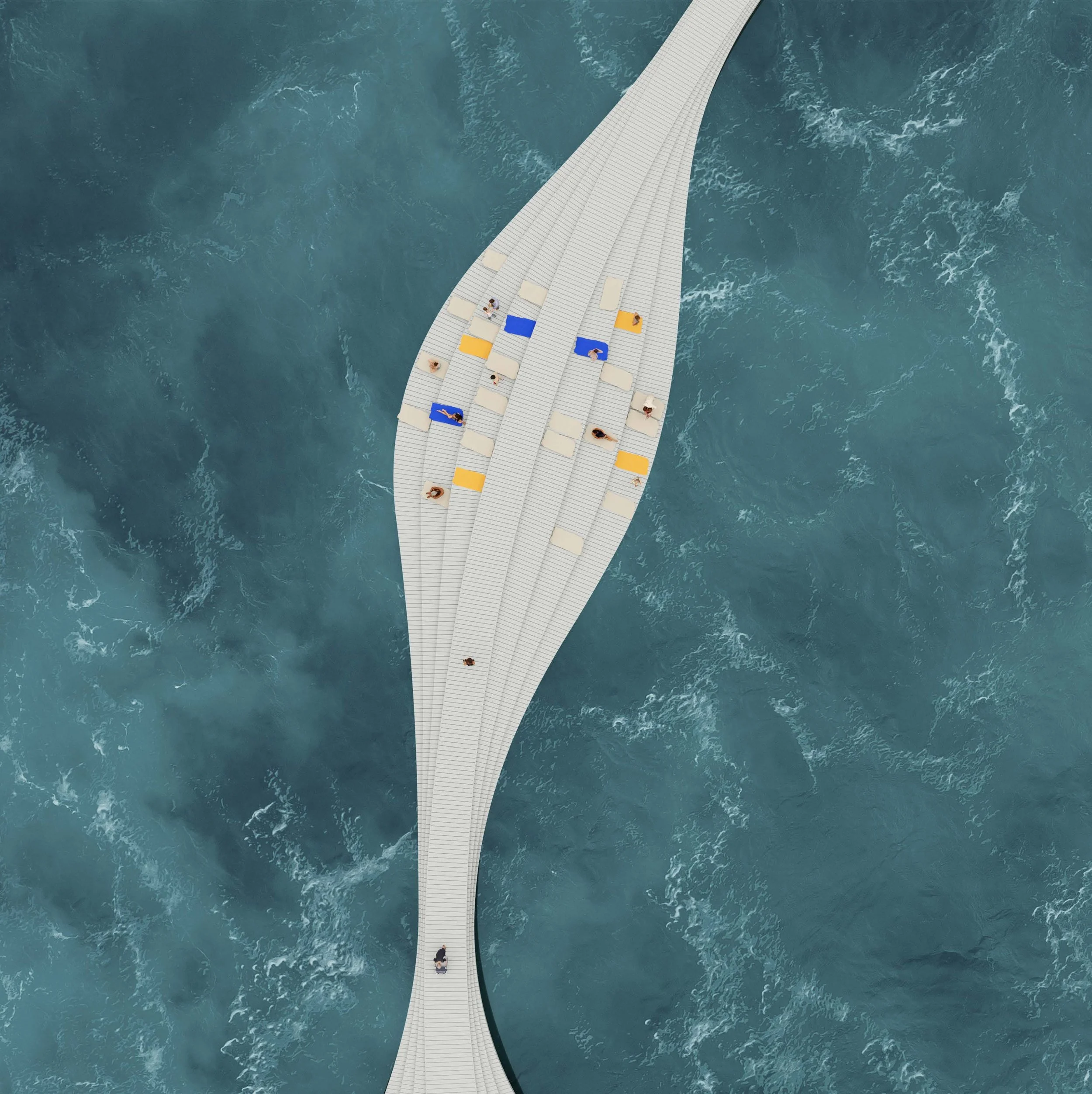
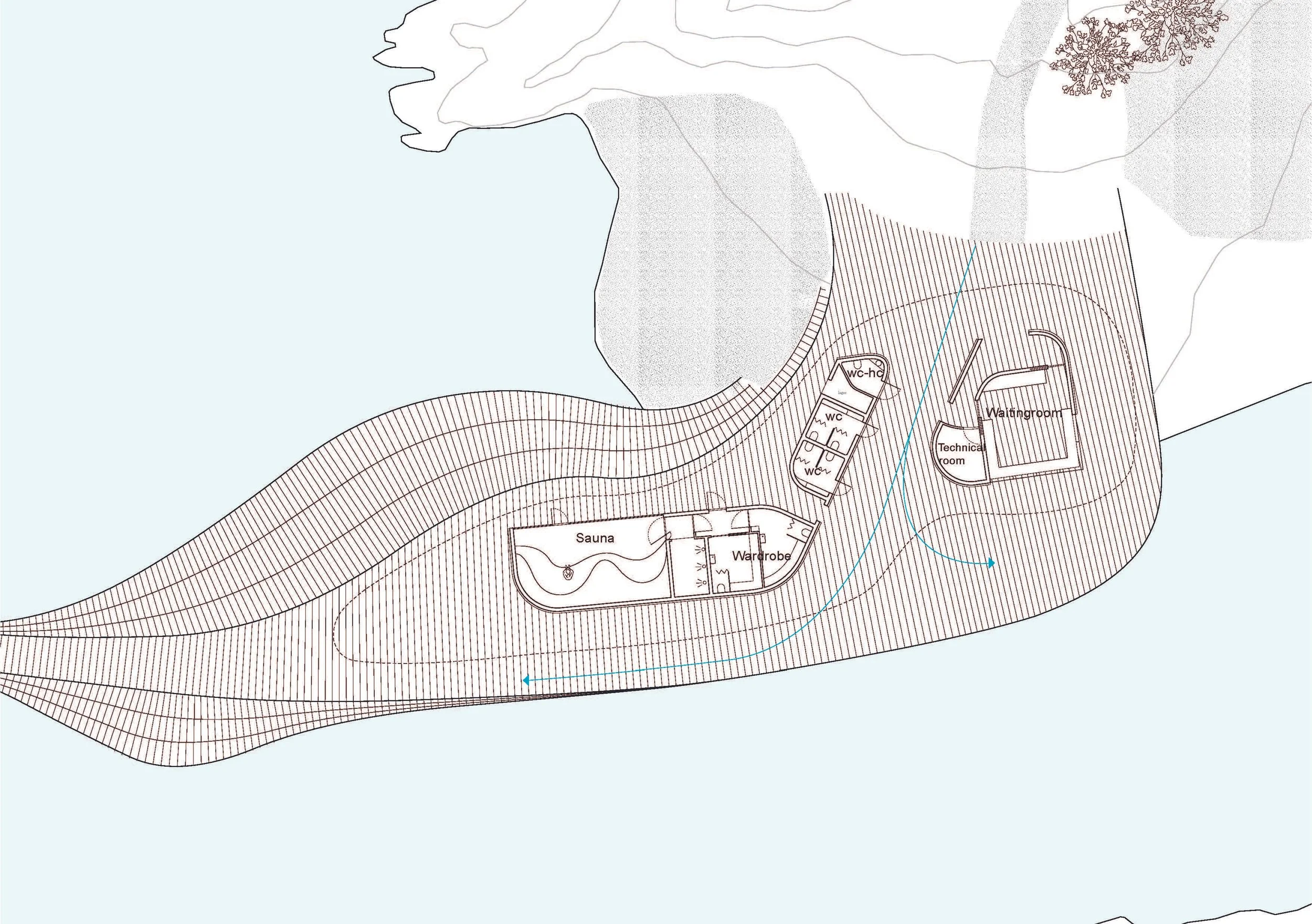
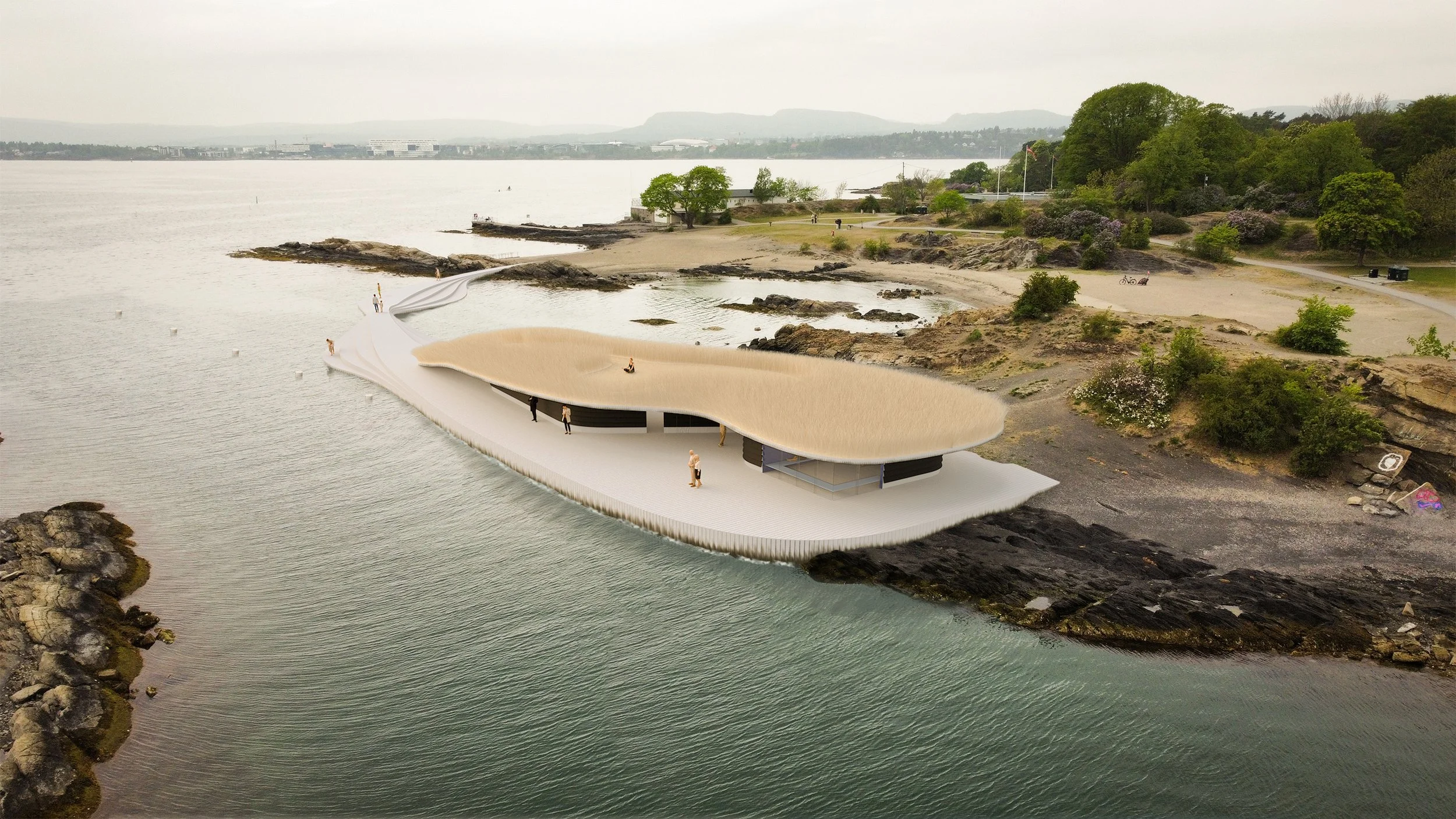
The project is placed 10 min with bus from the center of Oslo on a popular beach in Huk(Bygdøy). There used to be a ferry stop on Huk, but it closed down in 2004, and it has been missed ever since. The ferry stop is today one of the most popular places to swim, therefore if I was to bring back the ferry, this would interrupt and occupy an important part of the beach. My task therefore became about combining a ferry stop with a bathing platform, so that the swimmers can continue to swim here uninterrupted
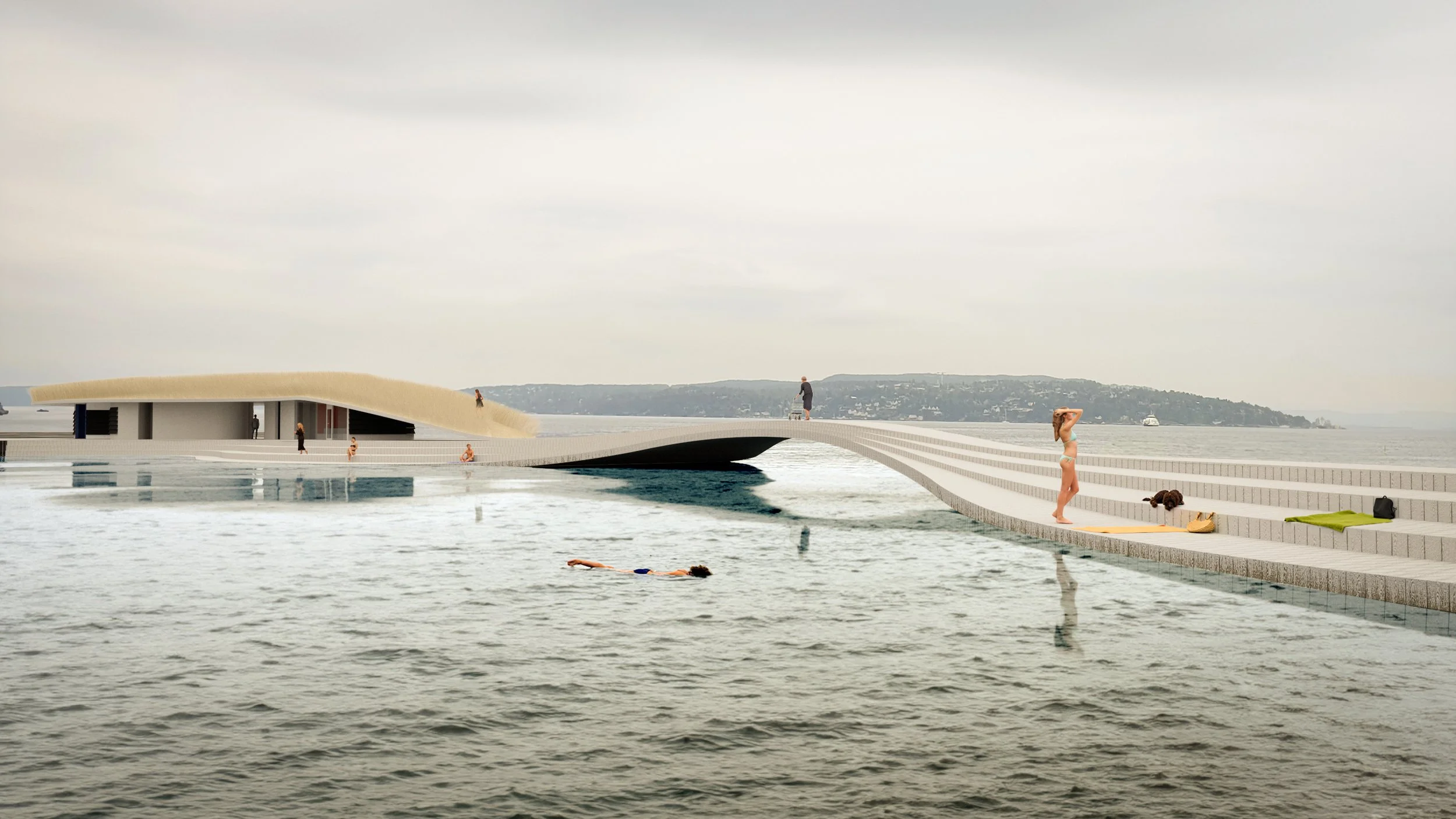
One of the most important tasks of the bridge is to make the ferry terminal accessible to everyone, including people with disabilities such as wheelchair users or elderly people. At the moment, the only way onto the terminal site is to walk over a steep and quite difficult ascent over a rocky hill. When designing the structure, I therefore had two options: either create a separate path around the hill or incorporate the path into the project. As you can see, I chose the latter.
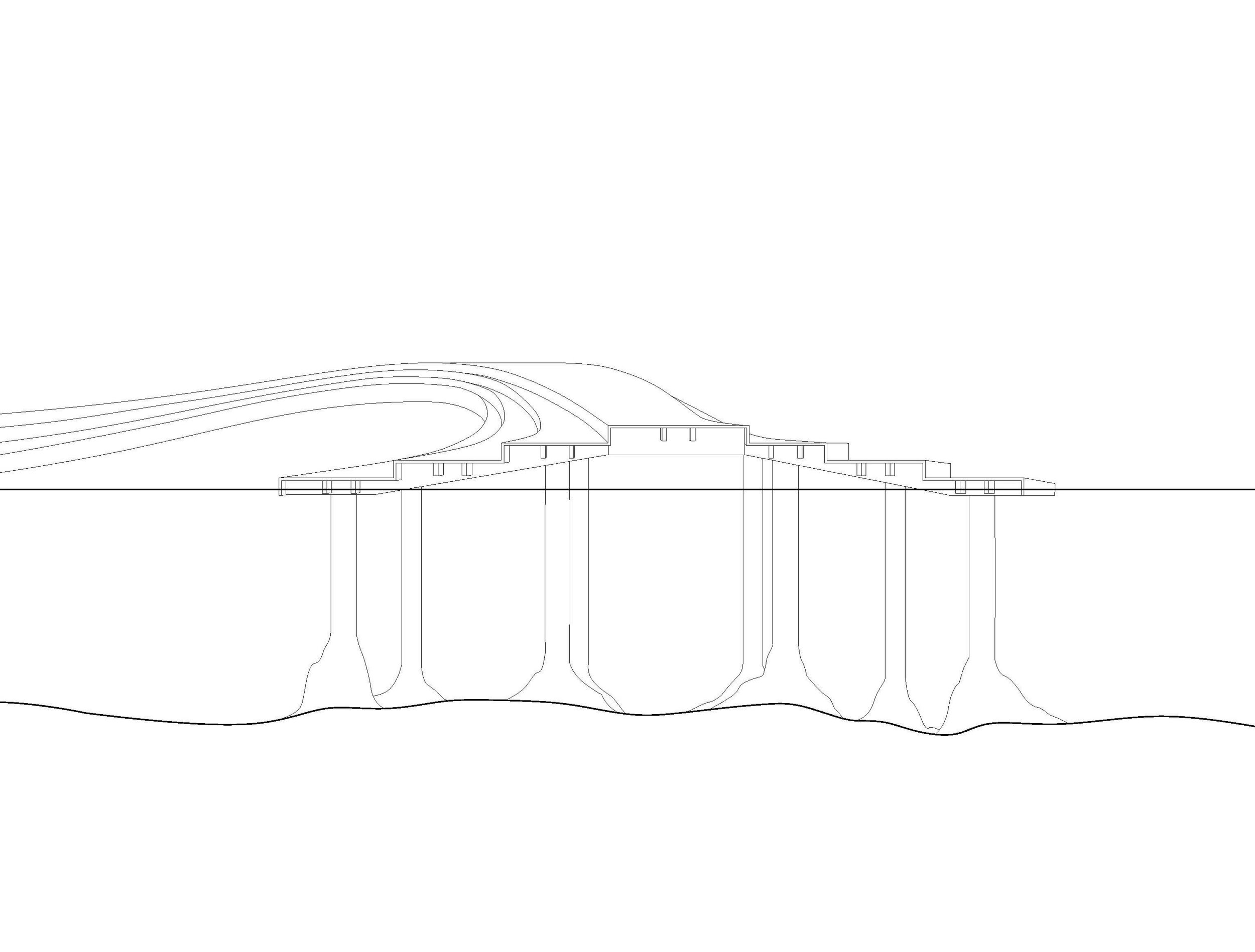
It was important to me that the area inside the bridge would not become a closed-off pool. The solution is for the structure to stand on concrete pillars mounted into the underwater ground, with the bridge sitting on top in a fixed position. With the tide, the water will flood some of the steps. This also allows the water to flow freely under the structure, meaning there will always be fresh water with little to no waves, which can be preferable for swimmers. The bridge also opens up underneath, allowing paddlers and swimmers to pass through the structure.